Out of curiosity, what does the $x^x$ graph look like? I physically cannot picture it when $x < 0$. Does such a thing exist or do we only define the do...
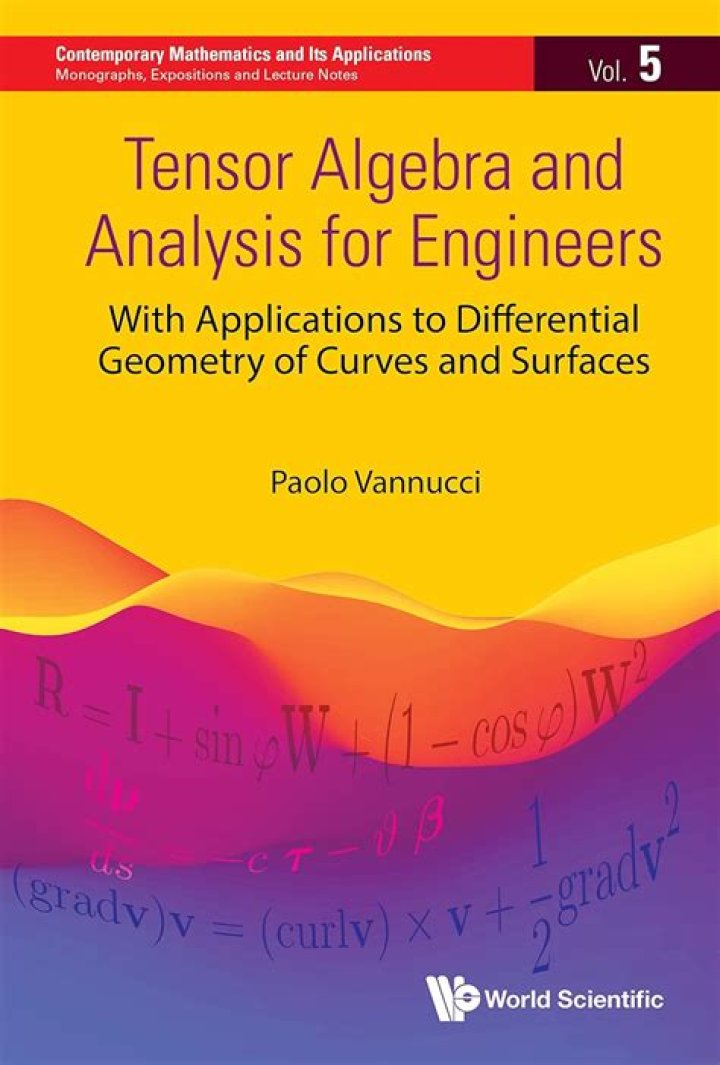
Let $M$ be a $R$-module. I know that the set of a tensor algebra is given by: $$T(M)=\bigoplus_{k=0}^\infty T^k(M)$$ where $T^K(M)=M\otimes ...\otimes M$ ...
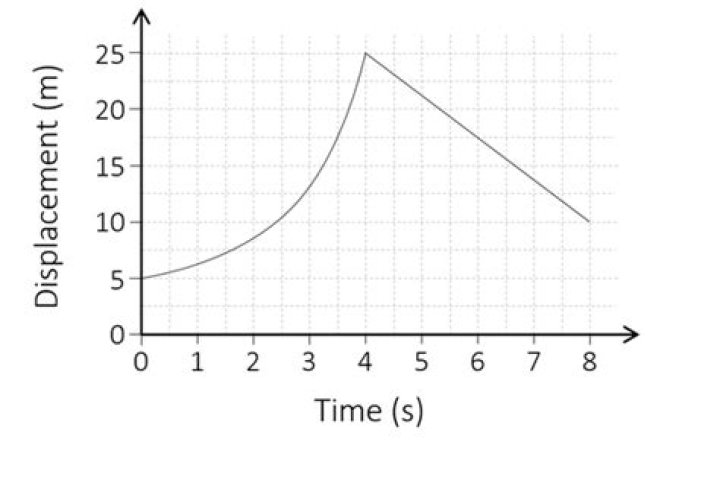
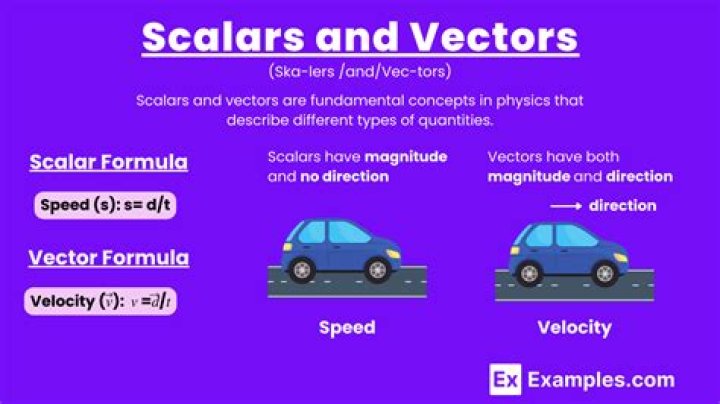
I know that the average velocity is given by the ratio $$ \frac{\text{total distance}}{\text{total time}} $$ It should be easy to figure out from a linear...
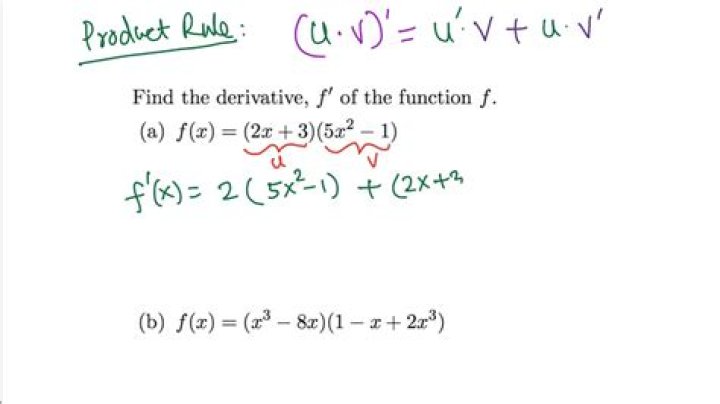
Lets say we have $f'(x)$ when $f(x)=(x^2+3)(x^3-1)$. We could use product rule with $u = (x^2+3)$ and $v = (x^3-1)$, but we would get the same answer...
Can one describe explicitly the Galois group $G=\operatorname{Gal}(\overline{\mathbb Q_p}/\mathbb Q_p)$? I only know the most basic stuff: unramified exte...
I want to calculate the derivative of a function with respect to, not a variable, but respect to another function. For example: $$g(x)=2f(x)+x+\log[f(x)]$...
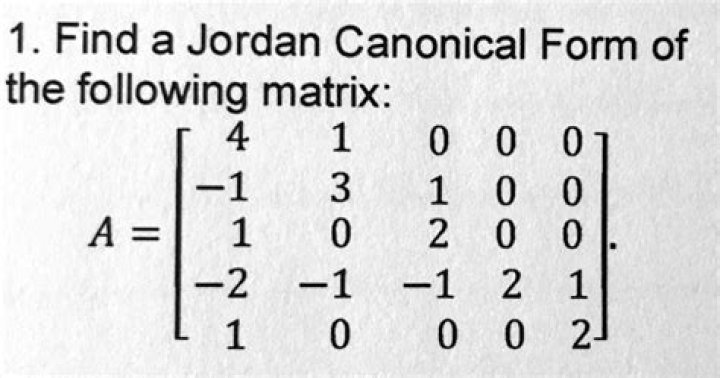
I apologize if this has already been answered, but I've seen multiple examples of how to compute Jordan Canonical Forms of a matrix, and I still don&...
I need to finding derivative of $\sqrt[3]{x}$ using only limits So following tip from yahoo answers: I multiplied top and bottom by conjugate of numerator...

![Derivative of a function with respect to another function. [duplicate]](https://ray.fundegar.com/uploads/derivative-of-a-function-with-respect-to-another-function-duplicate_720.jpg)
![Finding derivative of $\sqrt[3]{x}$ using only limits](https://ray.fundegar.com/uploads/finding-derivative-of-sqrt-3-x-using-only-limits_720.jpg)
