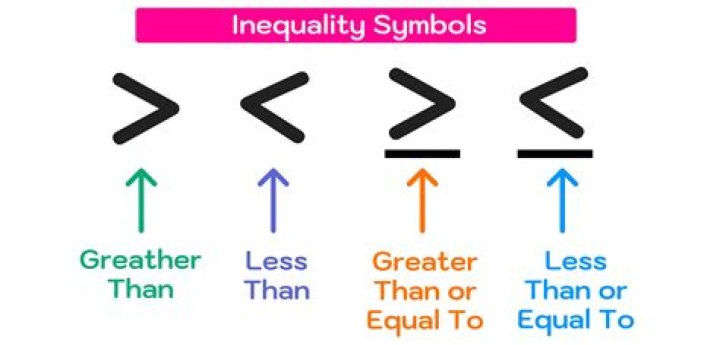
To indicate approximate equality, one can use ≃, ≅, ~, ♎, or ≒. I need to indicate an approximate inequality. Specifically, I know A is greater than a qu...
What I mean by that is, suppose say I have a circle centered at some point in the Euclidean space for which a certain property $P$ is true. How can I conc...
The question is to find $x$ in: \begin{equation*} x^2=e^x \end{equation*} I know Newton's method and hence could find the approx as $x\approx -0.7034...
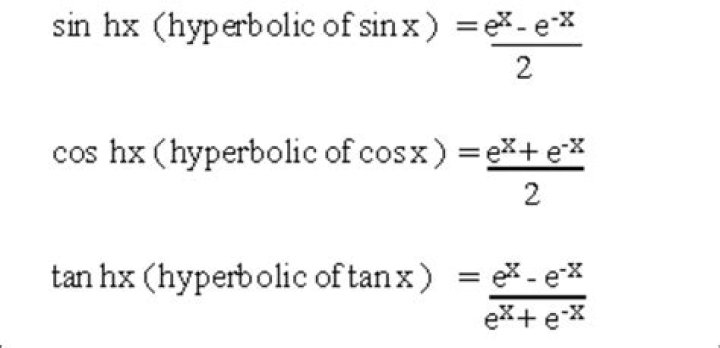
Identities for $\sin(2x)$ and $\sin(3x)$, as well as their cosine counterparts are very common, and can be used to synthesize identities for $\sin(4x)$ an...
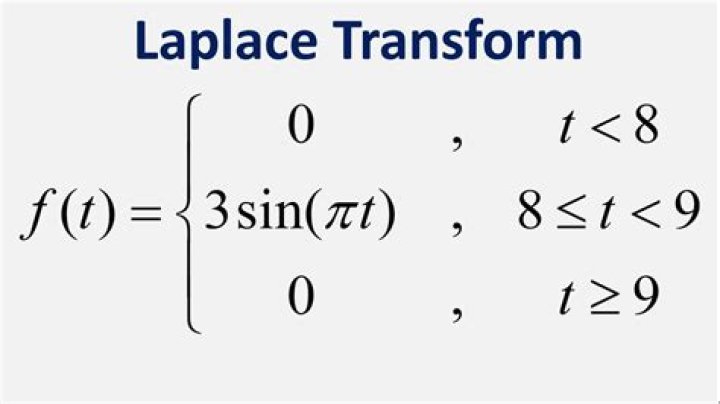
Using a translation theorem to determine that $ℒ{f(t-a)u(t-a)}$ is equivalent to $F(s) e^{-as}$, I determined that $ℒ\sin(2t)u(t-\pi)$ is equal to $ℒ\sin(...
Let $A$ be a commutative and unital $C^*$-algebra. What is the definition of a closed ideal of $A?$ My understanding: A subset $I$ of $A$ is an ideal if i...
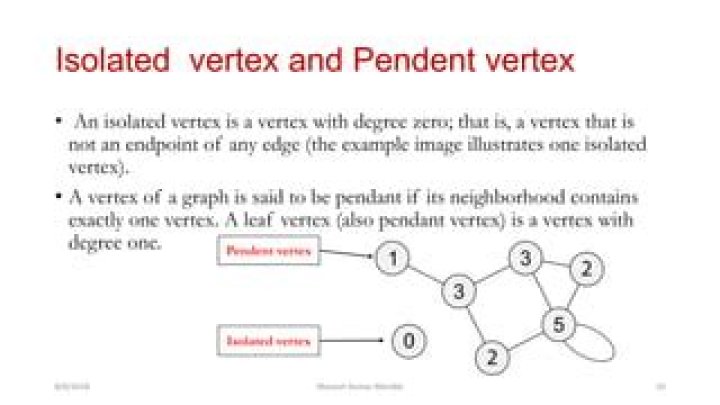
I have following definitions in my Graph Theory lecture notes: The components of a graph G are its maximal connected subgraphs A component (or graph) is t...
When I was a kid I used to draw this shape below but today I came against it as a problem. I don't know the name of this red curve below. It is enoug...
![Back substitution in Python [closed]](https://ray.fundegar.com/uploads/back-substitution-in-python-closed_720.jpg)